

Retirement Plans for Non-Profit Organizations
Working with a specialized adviser, like Fisher\SMB, can help non-profits understand the pros and cons of each plan type, allowing them to tailor a retirement program that is just right for their unique organization.
Navigating retirement plan options can be confusing.
There are over 1.5 million non-profit organizations in the U.S., most of which sponsor a retirement plan1. The two most common types of retirement plans for non-profit organizations are 401(k) and 403(b).
These plan types are similar, but also have some differences. Because non-profits have the option of sponsoring either a 401(k) or a 403(b), it’s important for them to fully understand the pros and cons of these plans.
Non-profit organizations often find it beneficial to also sponsor a non-qualified deferred compensation plan. This is a plan that allows the organization to provide additional benefits to key employees beyond what is offered in the 401(k) or 403(b) plan.
1 (Source:) National Center for Charitable Statistics
401(k) vs. 403(b): What’s the Difference?
|
401(k)
|
403(b)
|
||
|---|---|---|---|
|
Similarities
|
What it is
|
An employer-sponsored defined contribution plan
|
|
|
Annual Contribution Limit
|
$24,500 (+$8,000 catch-up contribution for age 50+)
|
||
|
Tax Treatment
|
Contributions are made pre-tax and grow tax-deferred
|
||
|
Differences
|
Who can Sponsor
|
Non-profit and for-profit entities
|
Non-profit organizations
|
|
Nondiscrimination Testing
|
Must pass annual testing
|
Exempt from certain compliance testing
|
|
|
Investments Allowed
|
Mutual funds, stocks, bonds, annuities,
CITs, collective funds |
Limited to mutual funds or annuities
|
|
|
Eligible for Maximum Allowable Contribution
|
No
|
Yes. Employees who have 15+ years
of service may qualify to contribute an additional $3,000 annually to the plan. |
|
Non-Profit Plan Providers
Understanding the landscape of providers who service non-profit retirement plans is key to being able to structure a retirement program tailored to your specific organization. It is important to understand that not all providers are created equal, and many may try to add annuity products to your plan. These can be problematic because they are rarely the best option for the plan participants. We recommend working with a specialized adviser who can help you evaluate and select the other providers for your plan.
Plan Administrator
Description:
Typically an employee of the organization sponsoring the plan, the Plan Sponsor is responsible for overseeing the plan and its providers.
Duties:
- Selects & monitors plan providers
- Acts in the best interest of the plan participants to help them afford the retirement they deserve
- Follows the plan document
Investment Adviser
Description:
An important service provider who can make the Plan Administrator’s job much easier, especially if the advisor is a fiduciary.
Duties:
- Oversees the investment options in the plan
- Provides day-to-day support to the Plan Sponsor
- Provides participant education
- Helps manage other providers
Third-Party Administrator*
Description:
A service provider who helps with the plan documents and plan design.
Duties:
- Plan design
- Plan documents
- Annual compliance testing
- Form 5500 Preparation
Recordkeeper*
Description:
A service provider who helps track and record the money in the plan.
Duties:
- Keeps track of all money types and contribution sources in the plan
- Maintains the plan website
- Provides plan statements
* Bundled Arrangement: A single vendor provides administration and recordkeeping.
Five Questions to Consider
When Evaluating the Best Retirement Plan for Your Non-Profit
Is your plan tailored to meet the goals of your organization?
The issue:
As a non-profit organization, you have many options when it comes to tailoring the retirement plan. For example, you can choose to sponsor a 401(k) plan or a 403(b) plan—there are pros and cons to each depending on the goals of your organization. There are also ways to tailor your plan to provide extra benefits, options, and capabilities to your employees.
How to address this issue:
Working with a specialized advisor can provide you with the guidance you need to determine whether a 401(k) or 403(b) plan is best suited for your organization. Furthermore, an advisor who specializes in non-profit retirement plans can help you navigate the special provisions that may be available to your plan.
For example, extra contributions for certain employees, how to leverage compliance testing exemptions, Roth options, and even student loan programs. An advisor with expertise in non-profit retirement plans can help you evaluate whether it makes sense to add a non-qualified deferred compensation plan (NQDC) to your retirement program.
Are your employees getting the support they deserve?
The issue:
The whole point of having a retirement plan is to help your employees afford to retire comfortably. Important services like tailored participant education programs and one-on-one employee meetings can really help employees get on track for retirement. However, many non-profit plans don’t include these important employee services.
How to address this issue:
Work with an advisor who specializes in:
- Providing Employee Education
- Employee Engagement Programs
Some advisors will come onsite to deliver tailored education presentations to your employees to make sure they understand their retirement benefits. Ideally the advisor would also meet with employees individually to discuss retirement goals, and how to best achieve them.
The advisor should also track employee progress and plan health metrics on an ongoing basis to continue tailoring the plan for maximum effectiveness. The best advisors will put these services in writing, and will guarantee them.
Is your annuity–based plan costing your employees big?
The issue:
Many non-profit plans are managed on an annuity platform. This is problematic because annuities within the retirement plan can cost your employees big by including:
- Higher Fees: Annuity fees tend to be ~20% higher than non-annuity fees. (Source: Brightscope ICI Defined Contribution Plan Profile)
- Commissions: Many annuity plan advisors are brokers, which means they get commissions. This means they have an incentive to put your employees in funds that pad their own pockets, instead of funds that are best for your employees.
- Layered Fees: Many of the investment options in annuity plans have fees and penalties, which can nickel and dime your employees, depleting their retirement savings.
How to address this issue:
Work with an advisor who will provide an open architecture platform that is not annuity based. Furthermore, the platform should have no proprietary fund requirements, nor should it provide any commission or revenue sharing. Typically, it is the recordkeeper who provides the annuity platform, however, the right advisor can steer you to a recordkeeper who offers a clean platform free of annuities.
The advisor should also track employee progress and plan health metrics on an ongoing basis to continue tailoring the plan for maximum effectiveness. The best advisors will put these services in writing, and will guarantee them.
Does the fund lineup align with the values of your organization?
The issue:
Many mission-driven organizations want the investments in their retirement plan to reflect their values. However, most providers aren’t able to accommodate this.

How to address this issue:
There are many options when it comes to the investments within the retirement plan. Working with an advisor who specializes in non-profit retirement plans can tailor the plan investment options to align with the values of the organization.
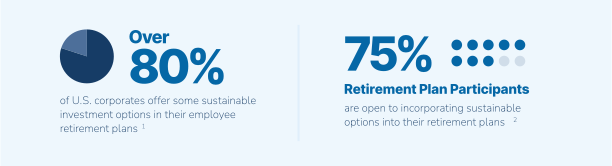
For example, including Environmental, Social, and Governance (ESG) funds as an option on the plan lineup can help better align the retirement plan with the values of the organization.
1Plan Sponsor Council of America 2021 403(b) Plan Survey
2Morgan Stanley Institute For Sustainable Investing (2025). www.morganstanley.com/content/dam/msdotcom/ en/assets/pdfs/MSInstituteforSustainableInvesting SustainableInvestmentOptionsinRetirementPlans.pdf
Are the board members taking on too much risk?
The issue:
Plan decision makers can be held personally liable for plan mishaps.

How to address this issue:
Anybody who makes decisions on behalf of the retirement plan is a plan fiduciary. Plan fiduciaries have a legal responsibility to the plan, and can be held personally liable for a myriad of plan mishaps—this applies to board members of a non-profit as well. A way to mitigate this risk is to delegate the responsibilities you can to a professional—like an ERISA 3(38) Investment Manager.
By working with an advisor who acts as an ERISA 3(38) Investment Manager, the board members can effectively delegate responsibility for the investment lineup to a professional.
Non-Fiduciary Advisor vs. Fiduciary Adviser
|
Non-Fiduciary Advisor
|
Fiduciary Adviser
|
|
|---|---|---|
|
Obligated to make decisions in your best interest
|
No
|
Yes
|
|
Responsible for Investment Recommendations
|
None
|
Yes
|
|
Makes Investment Decisions
|
No
|
Yes
|
|
Participates in Revenue Sharing
|
Very common
|
Rarely
|
|
Full 3(38) Investment Manager Coverage
|
No
|
Yes
|
Finding the Best Provider
Working with the right advisor can help your organization navigate the complexities of the non-profit retirement plan landscape. From helping determine the right plan type and parameters, to evaluating providers, to offering the right platform and services, finding the right advisor is the first step to getting the best retirement program for your non-profit.
Learn More about
Non-Profit Retirement Plans

403(b) Plans for Non-Profit Organizations
403(b) retirement plans are specifically designed to be offered by non-profit organizations. View this 403(b) resource page to learn more.

Government & Public Sector Retirement Plan Consulting | Fisher\SMB
Fisher\SMB is a trusted government retirement plan advisor specializing in 457(b), 403(b), and 401(a) plans. Learn more about our public sector consulting.

Why Governmental 457(b) Plans Matter for Your Organization
A 457(b) plan is a retirement savings option for government employees. It offers tax-deferred growth, flexible contributions, and no early withdrawal penalty—making it a smart alternative to a 401(k).