

Invest Before You Spend: The Power of Paying Yourself First
Time to read 5 Minutes
Waiting for the ‘right time’ to save for retirement can come at a high cost later.
You’ve probably heard many times that it’s important to set aside some money for retirement. But sometimes life gets in the way. Rent, groceries, childcare, gas, home maintenance—today’s immediate expenses, made worse by several years of high inflation, can quickly devour your paycheck. Meanwhile, saving for a distant, unknown future may feel like a low priority.
With the best of intentions, you may tell yourself, “I’ll save for retirement when I have some extra funds to spare.” But the hard truth is that day may never come unless you make it so. And the longer you wait, the harder it becomes to achieve the retirement you envision.
Why Starting Now is So Important
While the costs of daily life are front and center, building a retirement fund is likely the biggest financial goal you’ll ever pursue. It takes most people many years of consistent saving to build a nest egg large enough to leave the working world and live comfortably for 20-30 years or more.
“Living comfortably” doesn’t necessarily mean buying your dream home and traveling the world in retirement; it simply means having the means to afford housing, food and healthcare, and generally enjoy your life without working full-time. Unfortunately, millions of Americans may never achieve that goal.
Even Small Savings Can Amount to Big Numbers
You can put the odds in your favor by taking advantage of two powerful forces: the power of time and the power of compounding. Contributing to your retirement account early and often gives your money decades to harness the long-term growth of the financial markets.
As time goes on, the earnings from your investments create earnings of their own. Known as compound growth, this snowball effect allows your savings to grow exponentially and can turn even modest contributions into an impressive sum.
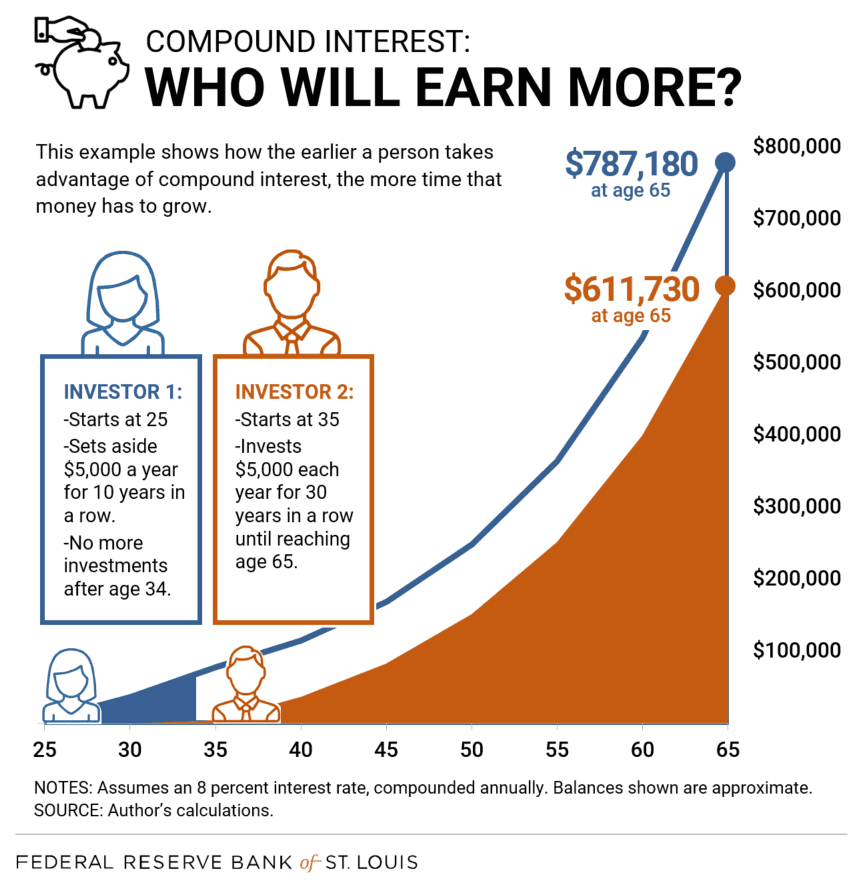
As the chart below shows, starting earlier and saving regularly can help you achieve much greater wealth over time, even while contributing much less than someone who starts later and saves longer. That’s why Albert Einstein called compound interest the eighth wonder of the world!
‘Paying Yourself First’ – the Ultimate Life Hack
We’ve covered why investing for retirement early is critical, but how do you come up with the money when times are tight? The answer is: pay yourself first. In other words, don’t pay all your expenses and wait to invest whatever’s left; that’s a strategy destined to fail. Instead, make your retirement a top priority. Set up automatic savings from every paycheck, so the money goes straight to your retirement account before you can think about spending it elsewhere.
Of course, paying yourself first means learning to live with a little less discretionary income. Here are some tips to make it easier:
- Get professional help. With Fisher\SMB as your company’s retirement plan advisor, you have access to experienced retirement specialists ready to offer personal guidance at no cost to you. They can help you come up with a realistic savings strategy based on your other expenses and life circumstances.
- Set a retirement goal. Saving is harder when you have no idea how much you’ll need or when you’ll need it. Setting a target year for retirement and a rough estimate of your savings goal gives you something to shoot for and allows you to track your progress. A common rule of thumb is to plan on retiring at age 67 with 10x your expected final salary, but your goals may vary. Your vision for retirement can (and probably will) change over the years, and that’s okay. The most important thing is to start saving for whatever may come.
- Save it before you can miss it. The ideal time to start saving for retirement is when you’re young, right when you start your first “adult job.” That way, you avoid building a lifestyle around your full take-home pay, and saving doesn’t feel like sacrificing.
If you’re further along in your career, it’s not too late. You can use the same strategy every time you get a raise or start a new job at a higher salary. Instead of constantly increasing your standard of living, devote at least part of that pay bump to a higher savings rate. If you wait until you’re used to having the extra cash, it will hurt more to part with it.
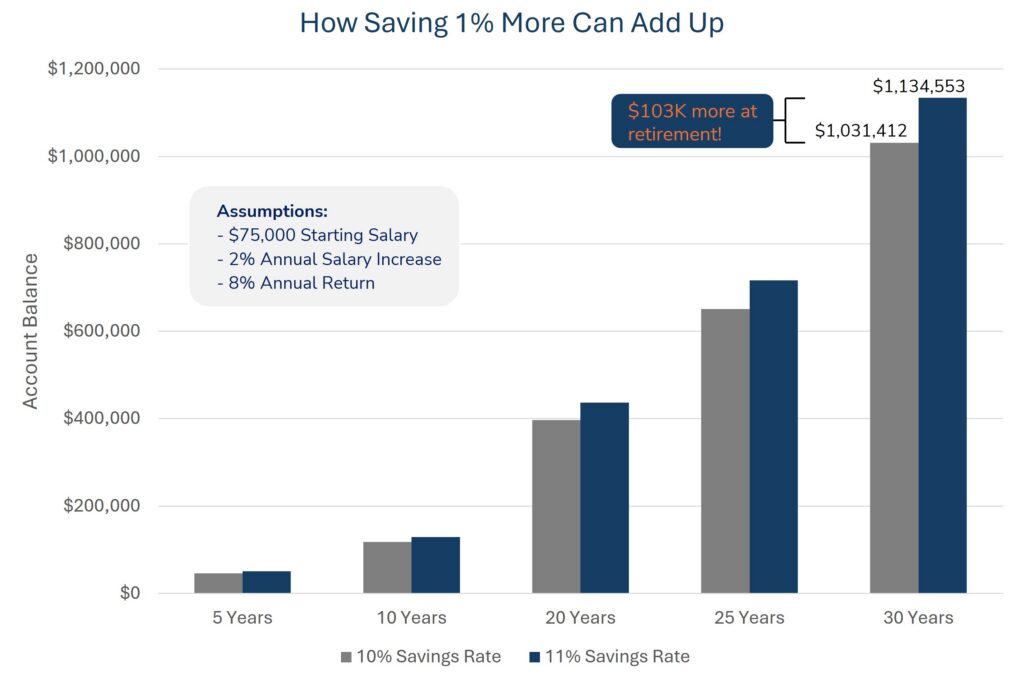
As the chart below illustrates. Saving just 1% more of your salary can add up to a big difference when you’re ready to retire.
- Cut back if you can. While paying for everyday essentials must come first, you may find there are other expenses you can lower or eliminate to free up cash for investing. For example, try shopping around for lower insurance rates, canceling that streaming service you rarely watch, or eating out less. Pro tip: various app-based tools can be very helpful for budgeting and finding expenses to cut. You may also consider delaying or downgrading large, non-essential purchases like expensive travel, the latest iPhone, or a brand-new car.
- Use windfalls to supercharge savings. Sometimes a golden opportunity comes along to give your retirement account a big boost. It might be a large tax refund, a bonus at work, or an inheritance. Enjoy it a little but resist the temptation to spend it all on things you don’t need. A nice lump sum contribution can help make up for prior months you’ve missed or serve as icing on the cake for the savings you’ve already built.
There will always be expenses that seem more urgent than saving for retirement. But for every extra dollar you’re able to put away today, your future self will thank you many times over.
Fisher\SMB is Here to Help
Whether you’re just getting started or looking to make the most of your current investments, knowing the next step can be the hardest part. As your retirement plan’s advisor, Fisher\SMB is available to help.
Schedule a meeting with one of our retirement specialists, and we’ll help you evaluate your situation, set retirement goals, and craft a retirement plan to help you reach them.