

Compare Fiduciary Options
Use this fiduciary comparison chart to compare the differences between a 3(21) and a 3(38) investment manager.
Fiduciary Comparison Chart
The word “fiduciary” is legalese, but the concept is simple. If you’re a decision maker on your company’s 401(k) plan, you’re responsible for doing right by your employees. Learn more about the responsibilities that come with being a fiduciary and how to manage them. Download the PDF of this chart here.
|
Broker-dealer
|
3(21) Plan Advisor
(Co-Fiduciary) |
Typical 3(38) Investment Manager (Fiduciary)
|
Fisher\SMB 3(38) Investment Manager (Fiduciary Plus)
|
|
|---|---|---|---|---|
|
Obligated to make recommendations in your best interest
|
✔
|
✔
|
✔
|
|
|
Select plan investment options
|
✔
|
✔
|
||
|
Monitors and updates plan investment options
|
✔
|
✔
|
||
|
Incentive structures aligned with client success (no revenue sharing)
|
✔
|
|||
|
Help create and maintain a fiduciary audit file
|
✔
|
|||
|
Fiduciary education for plan committee
|
✔
|
- 1Investing in securities involves the risk of loss. Intended for use by employers considering or sponsoring retirement plans; not for personal use by plan participants. Fisher Retirement Solutions®, Fisher\SMB™, FisherSMB™, and all related logos and designs are trademarks of FisherSMB Enterprises, LLC. ©2026 FisherSMB Enterprises, LLC.
learn more about
Fiduciary Responsibilities
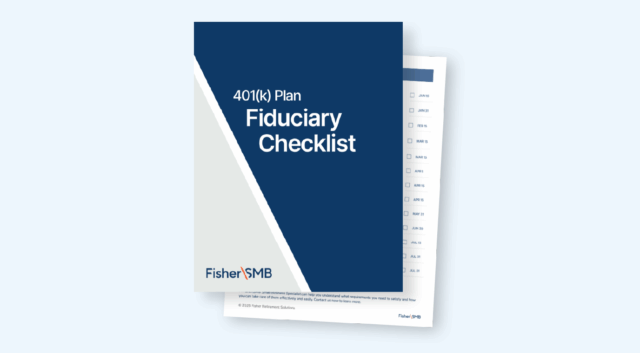
Fiduciary Risk Checklist
If you make decisions for your company’s retirement plan, including signing and filing Form 5500, plan design, or plan investment decisions, you are a fiduciary and could be vulnerable to fiduciary risk.

What it Means to Have a Fiduciary Advisor
As a 3(38) Investment Manager, we put your interests first with incentive structures that are aligned with your success. Fisher\SMB never accepts commissions, kickbacks, or revenue sharing. Learn what it means to have a fiduciary advisor on your side.

Five Legal Obligations of an ERISA Fiduciary
Being an ERISA fiduciary comes with big responsibilities—like acting in participants’ best interests, monitoring fees, and keeping investments diversified. This guide breaks down the five key obligations and shows how you can stay compliant without feeling overwhelmed.